
Latest iPhone 17 News on Design, Camera Quality, and Battery Power

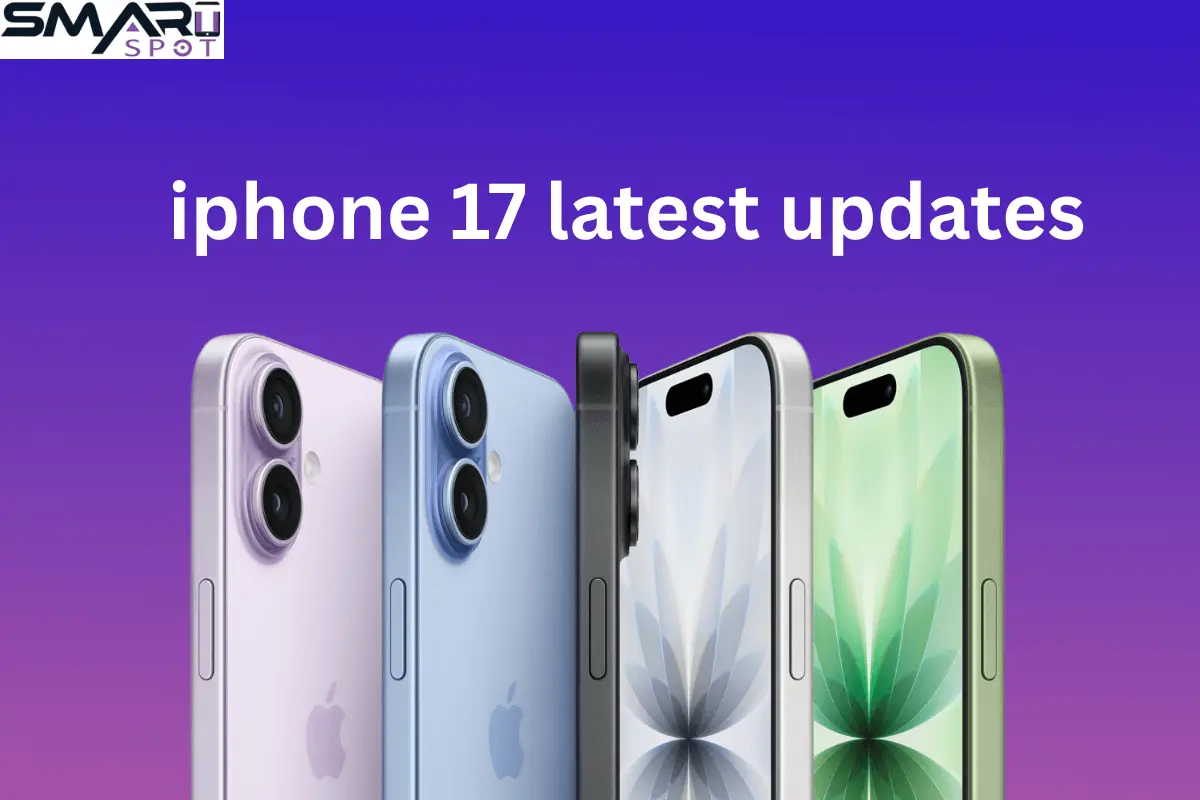
Released in September 2025, the iPhone 17 is Apple’s most affordable flagship iPhone. It is sold alongside the higher-end iPhone Air, iPhone 17 Pro and iPhone 17 Pro Max. Since the iPhone 17 is new now is a great time to buy iPhone.
The iPhone 17 comes with Apple’s A19 chip which makes the phone fast and smart. It has a bright OLED display with a smooth 120Hz refresh rate and Always On feature. The phone also has a dual-lens camera with two 48-megapixel cameras, a fast networking chip, stronger front glass and a customizable Action button for quick access to the camera and other features.
The starting price for the iPhone 17 is 9 making it a good choice for people who want great features at a reasonable price. If you want more power, Apple’s iPhone 17 Pro models have a stronger A19 Pro chip, a better cooling system and a triple lens camera system.
If you are looking for a more budget friendly option, you can also consider buying a used iPhone 17. A used iPhone 17 can give you most of the same features at a lower price helping you save money while enjoying Apple’s latest technology.
Design
When the first leaks of the iPhone 17 Pro came out earlier this year, the design looked a bit strange. The wide camera bump seemed awkward, but once you see the actual phone in person, it looks much better. The new shape and materials make the iPhone 17 very comfortable to hold, even without a case.
Apple has also introduced one of the best color lineups so far. I first picked the orange model, which looked bold but a bit too loud. It felt like I was saying, “I have the new iPhone, look at me.” So, I switched to the blue version, which looks stylish but more subtle. The silver model is also a strong option, giving a premium feel. If you want to buy iPhone, the color choices for the iPhone 17 Pro make it even more exciting.
The wide camera bump actually has a hidden benefit—it reduces wobble when the phone is placed flat on a table. With a case, there’s no wobble at all, which is a nice improvement.
Another big upgrade is the rounded corners. The sharp edges on older Pro models (like the iPhone 12–14) made them uncomfortable to hold. Apple improved this with the iPhone 15 and 16 Pro, but the iPhone 17 takes it further. Thanks to its aluminum frame, it feels softer and easier to grip. People who use iPhone daily will notice the difference right away.
The two-tone back, made with both glass and metal, also adds a fresh style. Apple says the glass is stronger against shattering than before, though it may still get scratches.
What makes this design special is the change from titanium to aluminum. Unlike the iPhone 15 and 16 Pro, which were mostly glass with titanium rails, the iPhone 17 Pro feels like a true metal phone. This reminds us of the iPhone 7 from 2016, but with a modern twist.
Overall, the iPhone 17 Pro design feels more practical and user-friendly. It may not be as sleek as the iPhone 15 or 16 Pro, but it looks fresh and unique. For anyone planning to buy iPhone in Dubai or elsewhere, this design makes the upgrade worth considering.
Performance
The new iPhone 17 comes with Apple’s latest A19 Pro chip, and as expected, it is very fast. Everyday tasks, apps, and games run smoothly without any lag. One area where I noticed a big jump was in transcription speed, which is much quicker compared to the A18 Pro chip. It’s almost as fast as Apple’s M4 Pro chip, which is impressive for an iPhone.
I also tested the performance with a small benchmark in my Quick Reviews app. It uses a random name picker that runs thousands of calculations while updating charts. When I ran this on the iPhone 17 Pro, it handled 542 updates per second. The older iPhone 16 Pro Max managed 405 updates per second. This means the new iPhone 17 is about 34% faster, showing a clear performance boost.
Another big issue with older models like the iPhone 15 and even the 16 Pro was overheating during heavy use. The 15 Pro got quite hot, while the 16 Pro improved but still wasn’t perfect. So far, the iPhone 17 Pro seems much better. Heat doesn’t appear to be a problem, making it more reliable for long gaming sessions or heavy work. I’ll keep an eye on it over time, but early results are promising.
For anyone looking to buy iPhone in Dubai, the iPhone 17 is a strong option. It’s faster, smoother, and runs cooler than the previous models, making it a great upgrade for performance lovers.
The Display
The iPhone 17 Pro carries almost the same screen as the iPhone 16 Pro. You get the same resolution, size, and brightness levels as before, so there are no big changes here.
Still, Apple has added two small updates. The first is a new anti-reflective layer on the screen. It does cut down reflections a little better than the 16 Pro, but the difference is not dramatic. By comparison, Samsung’s Galaxy S25 Ultra feels more advanced in this area, so Apple may still have room to improve.
The second update is a new option in Accessibility > Display & Text Size called “display pulse smoothing (PWM).” This setting changes how the OLED lowers brightness when the screen is very dim. Some users might find it easier on the eyes, but in my own experience, I didn’t notice much of a difference.
The Cameras
I don’t do full camera comparisons anymore, but I still want to share my thoughts on the iPhone 17 Pro camera system.
Apple calls the 2x and 8x zoom options “optical-quality zoom.” In the past, I thought this was just marketing talk because those zoom levels are crops of the sensor, not real extra lenses. But after testing, I think Apple’s claim is fair. Unlike traditional digital zoom, where the phone stretches pixels and reduces quality, here the phone captures the center part of the sensor and outputs it as a clean image.
By default, the iPhone 17 Pro camera takes 24MP photos using a 48MP sensor. This is consistent across all lenses (0.5x, 1x, and 4x). When you switch to 2x or 8x zoom, the phone still produces sharp images without stretching pixels.
Interestingly, Apple does use a bit of digital stretching, but only at “in-between” zoom levels. For example, at 7.9x zoom, the camera captures about 12MP but still outputs a 24MP photo by stretching it. I compared shots at 7.9x and 8x, and honestly, they looked almost the same. This shows Apple’s processing is doing a great job.
As for the rest of the cameras, the main and ultra-wide lenses seem nearly identical to last year’s, and they continue to deliver excellent, reliable photos. The 4x telephoto lens, however, is a big upgrade over the old 5x lens. It performs better in most lighting situations, especially in low light, thanks to its larger sensor.
The new selfie camera is also a highlight. It allows landscape selfies while holding the phone normally, which feels strange at first but works great. The quality is strong, with a slight improvement over last year’s model.
Apple also added new features like dual-capture, where you can record with the front and back cameras at the same time. The smaller video window (picture-in-picture) is saved directly in the file, so it can’t be edited out later. You can move it around while recording, but it adds some motion blur. This mode supports 4K, but only at 30fps. Dropping to 1080p still keeps the same frame rate.
For professionals, ProRes RAW and Genlock are useful tools. I don’t need Genlock, but I do plan to use ProRes more for my YouTube work since it gives better editing flexibility. ProRes RAW needs special apps like Final Cut Camera or Blackmagic, plus an external hard drive, so I’ll see if it fits into my workflow later.
Battery
Talking about battery life is always tricky because it depends on how each person uses their phone. What feels like “great battery life” for one person may feel too short for another. Still, I’ll share my own experience with the iPhone 17, what Apple claims, and what others have found.
I came from the iPhone 16 Pro Max, but I also used the smaller 16 Pro for a few months. The smaller one usually lasted me through the day, but I often dropped to 20% by bedtime. The 16 Pro Max, on the other hand, felt like it had endless battery—I never worried about charging it. The iPhone 17 Pro feels somewhere in between. It’s clearly better than the 16 Pro but doesn’t quite reach the level of the 16 Pro Max.
Apple says the iPhone 17 should last as long as the 16 Pro Max, with up to 33 hours of offline video playback. That might be true in tests, but in real life, most people don’t just watch downloaded videos all day. For me, battery life depends on standby time, Wi-Fi versus poor cellular signals, and my constant use of apps, social media, and web browsing.
Popular YouTubers like Mr whose the boss and The Tech Chap tested the iPhone 17 and found it lasted about the same as the 16 Pro Max, even on the European model with a smaller battery. So, as I keep using my phone, I may see results closer to Apple’s claims.
Charging also got a small upgrade. Mag Safe charging is now 25W (up from 22W), and wired charging remains about the same. With Apple’s new 40W charger, you can go from 0% to 50% in just 20 minutes. With a regular 20W charger, you’ll get to 50% in about 30 minutes, which is the same as last year’s phone.
Overall, I’m satisfied with the battery on the iPhone 17 Pro. It’s strong enough for daily use, and I don’t regret not buying the Max version this time. For people in the UAE, whether you’re buying a new iPhone in Dubai or even considering a used iPhone, the iPhone 17 battery gives a reliable and balanced experience.
Final Words
The iPhone 17 Pro does not change much in its display compared to the 16 Pro. Still, the small upgrades are worth noting. The new anti-reflective coating cuts down glare, and the display pulse smoothing setting makes the screen easier on the eyes for some users. While Samsung may still lead in this area, Apple is moving in the right direction with steady, careful changes.
For more simple guides, reviews, and updates on the latest smartphones, visit Smart Spot – your trusted place for smart tech tips.